

Damp and weights: the two checks that decide a used motorhome or caravan
How to check a used motorhome or caravan for damp and weight problems: moisture meter bands, habitation history, MTPLM versus MIRO, and licence limits.
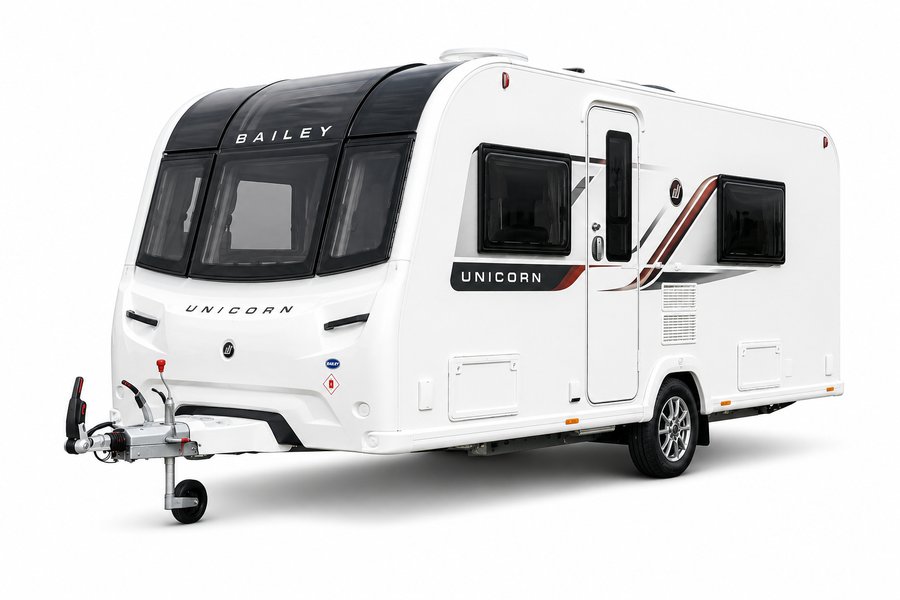
Know your weights. Check for damp. Travel with confidence.
- Damp is the big riskWater, not mileage, is what writes these vehicles off.
- Payload runs out fastMIRO is a factory figure. Fitted extras come off it.
- Habitation safetyGas, electrics and ventilation are checked nowhere else.
- Nobody checks for youNo database records whether a van is dry.
- Check before you payBoth problems are findable before money changes hands.
Why damp is the check that matters most
Most motorhomes and caravans do not die of engine failure. They die of water.
- Water finds the sealsThe habitation body is a timber frame skinned with bonded wallboard. Once water gets past a seal it soaks in quietly, sometimes for years.
- Timber rots silentlyWallboard delaminates and the frame behind it goes soft, with nothing showing on the inside until late.
- The fix is a rebuildThe only proper repair is to strip the interior back to the frame and rebuild it.
- The quote outruns the valueOn an older van that work regularly costs more than the vehicle is worth.
Bottom line
Damp, not mileage, is the single biggest financial risk when buying used. A motorhome with a sweet engine and a rotten rear panel is, in practical terms, a donor vehicle.
A habitation check is not an MOT
An MOT looks at the base vehicle only: brakes, lights, steering, emissions, chassis. It says nothing about the living quarters.
Damp readings
Taken throughout the body structure.
Gas system
Leak test and correct appliance operation.
Electrics
12V and 230V systems checked.
Ventilation
Gas appliances in a sealed box are a carbon monoxide risk.
No database, no reminder
A habitation check is not a legal requirement, so there is no penalty for skipping it. Many used motorhomes, and most privately kept caravans, have never had one.
A van with a folder of annual habitation reports is telling you something about its owner. A van with none is not automatically bad, but you are buying blind on the most expensive thing that can go wrong.
How damp readings actually work
A moisture meter is pressed against the interior wallboard at dozens of points. The trade works to rough bands.
Under about 15%
Normal
Typical for a vehicle that lives outdoors.
Roughly 15–20%
Investigate
Could be condensation, could be the early stage of an ingress.
Above 20–25%
High risk
Active water ingress and probable structural damage.
Treat these as typical industry practice rather than a standard set in law. Different workshops draw the lines slightly differently, and readings move with temperature and season.
What matters is the pattern. One slightly raised reading near a window is a conversation. A cluster of high readings along a roof joint is a walk-away.
Where damp hides
Water gets in where the body is pierced or joined.
- Window sealsCorners especially: the bottom corners are where water pools.
- Roof lights and ventsIncluding inside the surrounding trim.
- Awning railsAnd anything else screwed through the exterior skin.
- Floor edges and wheel archesUnder the washroom especially. Press with your heel and feel for sponginess or delamination.
- Behind fitted furnitureUnder and behind seat cushions, inside lockers, where nobody looks.
- Your nose, on entryA musty, earthy smell in a van that has been closed up beats anything the seller says.
Look for tide marks and staining on the wallboard, bubbling or lifting wall covering, corroded screw heads, and fresh sealant or new trim in odd places, which can mean a repair, or can mean a cover-up.
Get the history in writing
Before travelling to view, ask the seller in writing for the habitation service history and a copy of the last damp report with the actual readings, not a verbal assurance that it is bone dry. A dealer who services what they sell will have this, and a private seller with a well-kept van usually will too. If neither exists, price the van as if you will be paying for a full habitation inspection yourself, because you should be.
MTPLM, MIRO and the payload that is not really there
Every motorhome and caravan carries two weights on its plate. The third number is the one you live with.
MTPLM
Maximum technically permissible laden mass
3,500 kg
The most the vehicle may legally weigh.
MIRO
Mass in running order
3,050 kg
Roughly the vehicle as it left the factory.
Payload
MTPLM minus MIRO
450 kg
Everything you are allowed to add, on paper.
MIRO is a factory figure
It typically does not include what the previous owner had fitted, and every one of these comes straight out of your payload:
- Awning
- Second leisure battery
- Solar panel
- Tow bar
- Bike rack
- Extra gas bottle
After common fitted extras, water, gas and passengers, that 450 kg margin can be down to double digits. Some well-specced vans are effectively overweight with a family on board. Running over MTPLM is an offence, causes real trouble with insurers, and is exactly what a roadside weighbridge check finds.
Illustrative figures: read the actual plate, ask what has been fitted since new, and if the sums look tight put the van over a public weighbridge before you commit.
Licences and the 3,500 kg line
The reason so many motorhomes are plated at exactly 3,500 kg is the driving licence. A standard category B car licence covers vehicles up to 3,500 kg maximum authorised mass.
- Passed on or after 1 January 1997: anything heavier needs C1 entitlement, an extra test and periodic medicals.
- Passed before that date: drivers generally have C1 grandfathered onto their licence.
Manufacturers squeeze large vans under the 3,500 kg ceiling, which is precisely why payloads are so tight. Check the categories on your own licence before you fall for a 4,250 kg tag-axle.
Matching a caravan to the tow car
For caravans the weight question runs the other way: can your car tow it safely?
85%
of the tow car's kerbweight, the long-standing guideline for a fully laden caravan, especially for drivers new to towing.
5–7%
noseweight, as a share of the caravan's actual laden weight, and never more than the car or hitch limit allows.
The 85 per cent figure is a recommendation from the caravanning bodies, not law; the legal limits are the car's plated towing capacity and its gross train weight. But an outfit near 100 per cent is measurably less stable, and instability at motorway speed is how caravans end up on their roofs. Too little noseweight is a common cause of snaking; a cheap noseweight gauge is worth taking to a viewing.
Identity checks, and the check nobody does for you
Caravans have no registration plate of their own and no MOT, but they do have CRiS, the industry-run Caravan Registration and Identification Scheme, which records the chassis identity and can flag theft and outstanding finance. Run it on any caravan you are serious about. cris.co.uk
Be clear what it is
CRiS is an identity check. No database anywhere records whether a caravan is dry. Nothing checks damp for you.
Before you pay
Two habits protect you.
- 1Commission an independent damp and habitation inspection before money changes hands. Mobile engineers and approved workshops do pre-purchase checks.
- 2A seller who refuses access has answered your question.
- 3Budget for tyres on any caravan. Caravan tyres die of age, not wear, because the vehicle sits still for months.
- 4Read the date code on the sidewall and price replacements by age, not tread depth.
Compare motorhomes and caravans on their own terms
Motorhomes and caravans are compared only against their own kind, never against a hatchback. The extractor stores a category-specific spec per listing, and the completeness score flags where decision-relevant information is missing, which for these vehicles usually means weights and habitation history.
- Weights and habitation history flagged when missing
- Caravans show n/a for mileage and MOT
- Motorhomes get full DVSA MOT history on the base vehicle
- Compare like against like, never against cars